
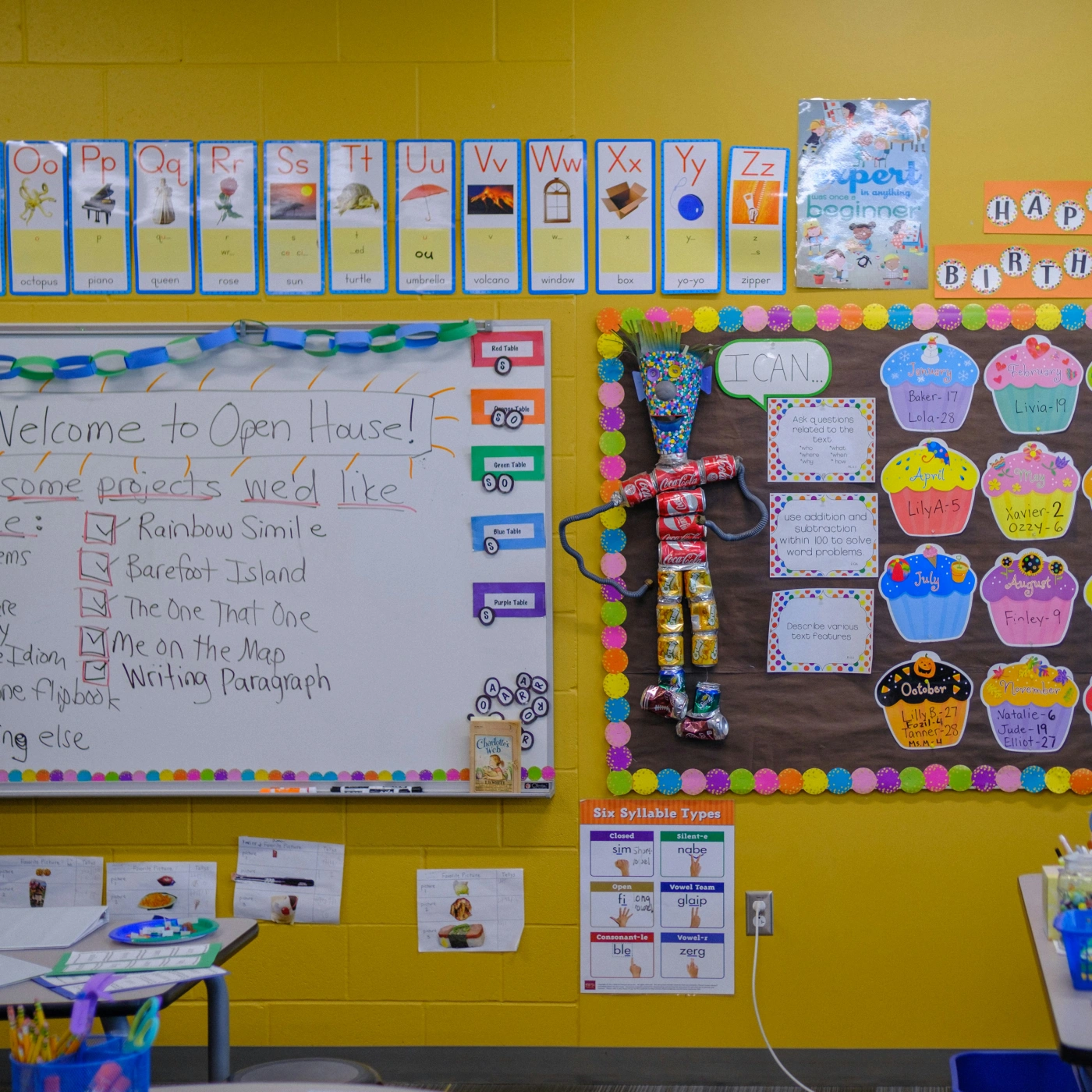
Walk into any well-run early childhood classroom and you will almost certainly find a short list of rules displayed at child height — ‘We listen when others speak,’ ‘We keep our hands to ourselves,’ ‘We take care of our classroom.’ To an adult, these statements might seem obvious or even unnecessary. To a two-, three-, or four-year-old, they are nothing of the sort.
Young children are in the earliest stages of understanding that the world has expectations, that other people have feelings and needs, and that their own behaviour has consequences for those around them. Classroom rules are not restrictions on childhood — they are one of the primary tools through which these foundational understandings are built. This article explains why, and what good classroom rules actually look like in practice.
What Classroom Rules Actually Are
Classroom rules are the agreed expectations that govern how children and adults behave within a shared learning space. At the early childhood level, they are typically few in number (three to five is ideal), stated in positive terms (‘We use kind words’ rather than ‘No shouting’), and created at a level of concreteness that young children can understand and remember.
Rules at this age are not about control for its own sake. They exist to create the conditions in which learning can happen — an environment where every child feels safe, every voice can be heard, and the space itself is treated with care. Without these conditions, even the richest learning materials and the most skilled teaching cannot reach their potential.
Educators at the pre schools in bangalore know that the earliest years of a child’s life set the foundation for every social and learning experience that follows — and that consistent, thoughtful classroom rules are one of the most important tools for building that foundation well.
Why Young Children Need Rules More Than Older Students
It might seem counterintuitive to suggest that the youngest learners need the most structured expectations. In practice, it is entirely logical. Young children are just beginning to develop the social and emotional capabilities that allow them to navigate group environments:
- Self-regulation — the ability to manage emotions and impulses — is still developing rapidly in children under five, and external structure from rules supports it
- Theory of mind — the understanding that other people have thoughts and feelings different from one’s own — is emerging but not yet fully formed in toddlers and preschoolers
- Language skills — the verbal tools needed to express needs, negotiate conflicts, and ask for help — are being built, and clear rules provide the vocabulary for social interaction
- Sense of safety — young children feel most confident in environments that are predictable; consistent rules create that predictability
Rules, in this context, are not limitations on young children’s freedom. They are the scaffolding within which freedom becomes possible — because a child who knows what is expected can relax into learning rather than spending their energy scanning the environment for threats or uncertainties.
The Developmental Benefits of Classroom Rules
Building Self-Regulation
Self-regulation is the ability to manage one’s own emotions, attention, and behaviour in response to the demands of a situation. It is one of the strongest predictors of academic achievement, positive relationships, and mental health across the life span — and it develops most powerfully during the early childhood years.
Classroom rules support self-regulation by making expectations external and explicit before children can fully internalise them. A child who has not yet developed the internal capacity to stop themselves grabbing a toy from another child is helped enormously by a clearly stated, consistently enforced rule: ‘We ask before we take.’ Over time, through hundreds of small experiences of following and understanding this rule, the behaviour becomes internalised — not because it was imposed, but because it was practised.
At quality best preschools in bangalore, self-regulation is treated as a teachable skill, not an expectation that children either have or don’t. Rules are one of the primary tools through which this teaching happens every day.
Developing Social Awareness
Young children are naturally egocentric — not in a selfish sense, but in a developmental one. Their understanding of the world begins with themselves, and the gradual expansion of awareness to include others is one of the central tasks of the early childhood years. Classroom rules accelerate this development by making the needs of the group visible and concrete.
A rule like ‘We wait for our turn to speak’ teaches a child, repeatedly and practically, that other people have things to say and that those things deserve to be heard. A rule like ‘We help keep our classroom tidy’ teaches shared responsibility. These are not abstract moral lessons — they are lived, daily experiences of what it means to be part of a community.
Creating a Foundation for Learning
A child who feels unsafe, overstimulated, or uncertain about what is expected cannot learn effectively. The cognitive resources that should be directed at curiosity, exploration, and understanding are diverted instead to monitoring the environment and managing anxiety. Classroom rules remove this burden.
When children know that hitting is not allowed, that their belongings are safe, that adults will respond consistently to conflicts, they are free to direct their full attention to the richly engaging world of learning around them. Order and creativity are not opposites in early childhood education — they are partners.
What Good Classroom Rules Look Like at the Early Childhood Level
Not all rules are equally effective. The best classroom rules for young children share several characteristics:
| Characteristic | What It Looks Like | Why It Matters |
|---|---|---|
| Positive framing | ‘We use walking feet’ rather than ‘No running’ | Tells children what to do, not just what to avoid — more actionable for young learners |
| Simple language | Short sentences with words children already know | Young children cannot follow complex or abstract instructions |
| Limited in number | Three to five rules maximum | More than five rules overwhelms young children and dilutes focus |
| Consistently enforced | The same response from all adults, every time | Inconsistency confuses children and undermines the rule’s meaning |
| Co-created where possible | Children contribute to making the rules | Ownership increases compliance and deepens understanding |
| Visually displayed | Posted with pictures at child height | Supports pre-readers and makes rules accessible independently |
How Rules Are Taught, Not Just Told
A rule posted on a wall is not a rule that children understand. Effective early childhood educators understand that rules must be taught through explanation, modelling, practice, and consistent reinforcement — the same way any other skill is taught.
Explaining the Why
Young children respond far better to rules when they understand the reason behind them. ‘We walk inside because running can hurt ourselves or our friends’ is a rule a three-year-old can genuinely understand and remember. ‘Don’t run’ is a command that invites testing. The difference is not just language — it is respect: treating the child as capable of understanding, not merely of complying.
Modelling and Role Play
Children learn by watching and imitating. Educators who narrate their own rule-following behaviour (‘I’m going to walk carefully to the book corner because I don’t want to knock into anyone’) and use puppet play or role play to explore rule scenarios give children the tools to understand rules from the inside rather than just the outside.
Consistent, Calm Reinforcement
When rules are broken — and they will be, because young children are learning, not performing — the response matters as much as the rule itself. Calm, specific redirection (‘Remember our rule: we use kind hands. Let’s find another way to get what you need’) is far more effective than punishment or shame. It reinforces the rule, teaches the behaviour, and maintains the relationship between adult and child that makes all learning possible.
Families choosing among the top nursery schools in bangalore for their child’s first school experience should ask not just what the rules are, but how they are taught and how children are supported when they struggle to follow them — because the answer reveals a great deal about the school’s understanding of early childhood development.
The Role of Rules in Helping Children Feel Safe
Children — particularly very young children new to group settings — need to feel safe before they can learn. Safety at this age is not just physical; it is emotional and social. A classroom where the rules are clear and consistently applied is a classroom where children know what to expect — from the adults, from their peers, and from the environment itself.
This predictability is the foundation of trust, and trust is the foundation of learning. A child who trusts their environment can take risks: try something new, ask a question they’re not sure about, make a mistake without fear of humiliation. These are the conditions that early childhood education exists to create — and classroom rules are one of the most important tools for creating them.
Rules at School and Rules at Home: The Importance of Consistency
Rules work best when they are consistent across the environments a child inhabits. When school rules and home expectations align closely — when the values of kindness, listening, and sharing are modelled and expected in both settings — children learn faster, behave more consistently, and develop a more integrated sense of what is right and expected.
This is one reason why early childhood educators regularly share their classroom rules with families and invite parents to reinforce the same language and expectations at home. The partnership between school and family is not a nice extra in early childhood education — it is one of the most important factors in children’s development and wellbeing.
At the best montessori schools in bangalore and similar early learning environments, parent communication is treated as central to the educational programme — because children’s development happens across home and school simultaneously, and consistency across both contexts makes everything that happens in each one more powerful.
Key Takeaways
- Classroom rules create the predictable, safe environment that young children need in order to learn and develop
- Rules support self-regulation, social awareness, and cognitive development — they are developmental tools, not control mechanisms
- The best early childhood rules are positively framed, simply worded, limited in number, and consistently enforced
- Rules must be taught through explanation, modelling, and calm reinforcement — not simply posted and assumed to be understood
- Consistency between school rules and home expectations significantly amplifies the developmental benefit of both
Conclusion
Classroom rules for young children are not an adult convenience — they are a genuine gift to children. They create the safe, predictable, respectful environment in which curiosity can flourish, friendships can form, and the earliest foundations of character can be laid. When rules are thoughtfully designed, clearly explained, and warmly enforced, they don’t diminish childhood — they protect it.
FAQs
- How many classroom rules should a preschool classroom have?
Three to five rules is the widely recommended number for early childhood classrooms. Any fewer and important expectations may be uncovered; any more and young children struggle to hold them all in mind. The rules should address the most essential expectations for safety, respect, and learning.
- Should classroom rules be positive or negative in wording?
Positive wording is significantly more effective for young children. ‘We use walking feet’ tells a child what to do; ‘No running’ only tells them what not to do, leaving the acceptable alternative unclear. Positive rules are more actionable and easier for young learners to follow.
- At what age can children understand classroom rules?
Children as young as two can begin to understand simple, concrete rules — particularly when they are consistently modelled by adults. Full internalisation — where children follow rules because they understand and agree with the reason, not just because an adult is watching — develops gradually through the preschool and early primary years.
- What should I do if my child breaks a classroom rule repeatedly?
Repeated rule-breaking is almost always communication — about something the child is finding difficult, doesn’t understand, or needs support with. Rather than escalating consequences, it is worth exploring what is driving the behaviour and working collaboratively with the teacher to address the underlying need.
- Should children help create their classroom rules?
Yes, where developmentally appropriate. Even very young children can contribute to simple rule-making conversations, and the sense of ownership that comes from participation significantly increases compliance and understanding. In practice, educators typically guide the process so that essential rules are covered.
- How can parents reinforce classroom rules at home?
Ask the teacher what the classroom rules are and use similar language and expectations at home. Consistency between school and home environments is one of the most powerful supports for young children’s rule-following and social development.
- Are classroom rules the same as discipline?
Related but distinct. Rules are the expectations; discipline is how adults respond when rules are not followed. Good discipline in early childhood is not punitive — it is instructional. It teaches children what to do differently and supports the development of self-regulation rather than imposing compliance through fear.
- Do classroom rules limit children’s creativity and freedom?
No — when well-designed, they enable it. Children who feel safe and know what is expected are free to direct their energy toward curiosity, creativity, and exploration. A chaotic environment without clear expectations is actually more limiting for young learners than a warm, predictable one with clear rules.
