
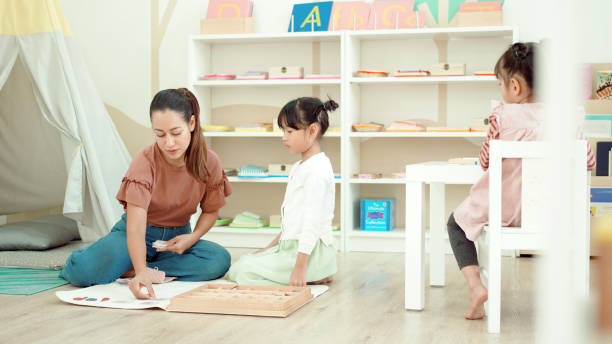
Every parent wants their child to enjoy learning, feel confident, and grow into an independent thinker. During the early years, the way children are taught plays a major role in shaping these qualities. One educational approach that continues to gain trust worldwide is the montessori method of teaching.
Rather than focusing on memorisation or rigid instruction, Montessori education encourages children to explore, discover, and learn at their own pace. This guide explains how the montessori method of teaching works, why it appeals to so many parents, and how it supports a child’s overall development.
What Is the Montessori Method of Teaching?
The montessori method of teaching was developed by Dr. Maria Montessori, an Italian physician and educator. Her philosophy was simple yet powerful: children learn best when they are respected, trusted, and allowed to explore naturally.
In Montessori classrooms, learning is hands-on and child-led. Children choose activities based on interest, work independently or in small groups, and learn through experience rather than instruction alone. Teachers observe, guide, and support rather than direct every step.
Why the Montessori Approach Feels Different
Parents often notice that Montessori environments feel calmer and more purposeful than traditional classrooms. This is because the montessori method of teaching is designed around how children naturally learn.
Some key differences include:
- Children progress at their own pace rather than following strict timelines
- Learning materials are tactile and self-correcting
- Independence is encouraged from an early age
- Mistakes are treated as part of the learning process
This approach helps children build confidence without pressure.
Core Principles Behind Montessori Education
To truly understand the montessori method of teaching, it helps to look at its guiding principles.
Respect for the Child
Every child is seen as capable and worthy of trust. Teachers listen, observe, and respond to individual needs.
Learning Through Experience
Children use specially designed materials to understand abstract concepts through touch and movement.
Prepared Environment
Classrooms are organised, calm, and accessible, allowing children to work independently.
Freedom with Responsibility
Children are free to choose activities but are also taught to care for their space and respect others.
How Montessori Supports Independence
One of the most valued aspects of the montessori method of teaching is how it nurtures independence.
Children are encouraged to:
- Dress themselves
- Choose their work
- Complete tasks independently
- Clean up after activities
- Solve problems on their own
Over time, this builds self-confidence, focus, and responsibility—skills that extend far beyond the classroom.
Learning Areas in a Montessori Classroom
Montessori classrooms are divided into carefully designed learning areas, each supporting different aspects of development.
- Practical Life: Everyday activities that build coordination and self-care skills
- Sensorial: Activities that refine the senses and observation skills
- Language: Vocabulary development, reading, and writing
- Mathematics: Hands-on materials that make numbers meaningful
- Cultural Studies: Geography, science, and awareness of the world
Each area works together to support holistic growth.
Social and Emotional Growth Through Montessori
The montessori method of teaching places strong emphasis on emotional and social development. Mixed-age classrooms allow younger children to learn by observing older peers, while older children develop leadership and empathy.
Children learn to:
- Communicate respectfully
- Resolve conflicts calmly
- Work independently and collaboratively
- Develop patience and empathy
These social skills form a strong foundation for later life.
Is Montessori the Right Fit for Every Child?
While the montessori method of teaching benefits many children, parents should consider their child’s personality and learning style.
Montessori works especially well for children who:
- Enjoy hands-on activities
- Learn best through exploration
- Need space to work at their own pace
- Thrive in calm, structured environments
Observing a classroom can help parents decide if the approach feels right.
Choosing an Authentic Montessori School
Not all schools that use the Montessori name follow the method fully. Parents are encouraged to look beyond labels and understand how the philosophy is applied in practice.
When exploring best preschools in bangalore, many parents focus on classroom setup, trained teachers, and how much independence children are given.
Similarly, families searching for best montessori schools near me often prioritise schools that stay true to Montessori principles rather than combining them loosely with traditional methods.
Those evaluating best montessori schools in bangalore may also look at how the school balances academics with emotional and social development.
Supporting Montessori Learning at Home
Parents can extend Montessori principles into everyday life without special materials.
Simple ways to support the montessori method of teaching at home include:
- Allowing children to do simple chores independently
- Creating child-accessible spaces
- Offering limited choices instead of instructions
- Encouraging patience and problem-solving
- Respecting your child’s pace
Consistency between home and school strengthens learning.
Long-Term Benefits of the Montessori Method of Teaching
The impact of Montessori education often extends well beyond early childhood.
Children educated through the montessori method of teaching tend to develop:
- Strong concentration skills
- Intrinsic motivation
- Confidence in decision-making
- Adaptability and creativity
- A genuine love for learning
These qualities support both academic success and personal growth.
Conclusion
The montessori method of teaching offers a thoughtful, respectful approach to early education—one that values independence, curiosity, and emotional development as much as academic learning. By allowing children to explore, make choices, and learn through experience, Montessori education helps build confident and capable learners.
For parents seeking an approach that supports the whole child, Montessori provides a strong foundation for lifelong learning.
FAQs
1. What is the montessori method of teaching?
It is a child-centered approach that focuses on hands-on learning, independence, and self-paced development.
2. At what age can children start Montessori education?
Most children begin Montessori between 2.5 and 3 years of age.
3. Does the montessori method of teaching focus on academics?
Yes, but academics are introduced through hands-on experiences rather than rote learning.
4. Are Montessori classrooms structured or flexible?
They are structured environments that allow flexibility within clear boundaries.
5. Can Montessori principles be followed at home?
Absolutely. Encouraging independence and respect at home aligns well with Montessori learning.
