
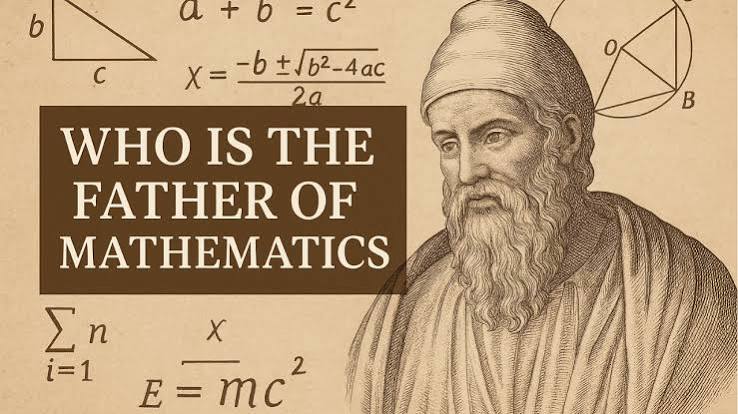
Long before calculators and computers, one man used pure curiosity and careful observation to solve some of the world’s biggest mathematical and scientific puzzles. Archimedes, often called the Father of Mathematics, lived in ancient Greece more than 2,000 years ago, yet his discoveries still shape how we understand physics and engineering today. Introducing children to historical figures like Archimedes, something many pre schools in Bangalore do through simple storytelling, helps young learners see that curiosity and persistence can lead to extraordinary discoveries. This blog explores his life, his most famous inventions, and why his work still matters.
Who Was Archimedes?
Archimedes was born around 287 BCE in Syracuse, a Greek city in present-day Sicily, Italy. He was a mathematician, physicist, engineer, and inventor — a true all-rounder of ancient science. He spent much of his life studying shapes, forces, and the natural world, often testing his ideas through real experiments rather than relying on theory alone.
Why Is Archimedes Called the Father of Mathematics?
Archimedes made groundbreaking contributions to geometry, calculus concepts, and the understanding of pi. He calculated areas and volumes of shapes with remarkable accuracy using methods that predated modern calculus by nearly 2,000 years. His systematic, logical approach to problem-solving earned him this respected title.
Archimedes’ Great Inventions and Discoveries
Archimedes is remembered not just for theories, but for practical inventions that solved real-world problems. Here are his most famous contributions.
1. The Archimedes Screw
This spiral-shaped device was designed to lift water from low areas to higher ground. It is still used today in irrigation systems, sewage treatment plants, and even some amusement park rides, making it one of history’s most enduring inventions.
2. The Principle of Buoyancy
Famously discovered while taking a bath, Archimedes realised that an object placed in water displaces a volume of water equal to its own volume. This is now known as Archimedes’ Principle, and it explains why some objects float while others sink.
This idea is often introduced playfully through water-based experiments at daycare in Bangalore, where children test which objects float and which sink, recreating Archimedes’ famous discovery in a hands-on way.
3. The Law of the Lever
Archimedes explained how levers work, famously saying, “Give me a lever long enough and a place to stand, and I will move the world.” His work on levers laid the foundation for simple machines still used in tools and construction today.
4. Compound Pulleys
He designed pulley systems that allowed heavy objects, including entire ships, to be lifted with significantly less effort. This invention was crucial for both military and everyday engineering tasks in ancient times.
5. Calculating Pi
Archimedes developed one of the earliest methods to estimate the value of pi (π) by comparing the perimeters of polygons inside and outside a circle. His estimate was remarkably close to the value we use today.
6. Defensive War Machines
During the siege of Syracuse, Archimedes designed powerful catapults and claw-like cranes to defend his city from invading ships, showcasing his skills as a brilliant military engineer as well as a mathematician.
Why Archimedes Still Matters Today
Many modern technologies trace their roots back to Archimedes’ discoveries. His work influences engineering, shipbuilding, water management, and even space science. Teaching children about his contributions helps them appreciate how ancient ideas continue to shape the modern world.
- Buoyancy principles are used in designing ships and submarines
- The Archimedes screw is still used in modern water pumps
- Lever and pulley systems form the basis of construction equipment
- His mathematical methods influenced the later development of calculus
Fun Ways to Introduce Archimedes to Young Children
Children don’t need to understand complex physics to appreciate Archimedes’ story. Simple, hands-on activities work best.
- Try a sink-or-float experiment using household objects and water.
- Build a simple lever using a ruler and a small object to lift.
- Watch short animated videos that explain his “Eureka!” bathtub story.
- Read illustrated biographies designed for young readers.
- Encourage your child to ask “why” and “how” questions, just like Archimedes did.
Many top nursery schools in Bangalore use similar science exploration activities to build early curiosity about how the physical world works, often without children even realising they are learning physics concepts.
Encouraging a Love for Math and Science Early On
Stories about historical figures like Archimedes can spark a lifelong interest in STEM subjects. Presenting math as a tool for solving real, exciting problems — rather than just numbers on a page — helps children develop a more positive relationship with the subject.
Parents researching best preschools in Bangalore often look for programmes that introduce STEM concepts through stories and hands-on exploration rather than rote learning, which builds a stronger foundation for later academic success.
Conclusion
Archimedes, the Father of Mathematics, showed the world that curiosity, observation, and persistence can lead to discoveries that last for thousands of years. From the Archimedes screw to the principle of buoyancy, his inventions continue to influence science and engineering today. Introducing children to his story early on helps nurture curiosity, critical thinking, and a genuine interest in how the world works — qualities that benefit them far beyond the math classroom.
FAQs
1. Why is Archimedes called the Father of Mathematics?
Archimedes earned this title because of his groundbreaking work in geometry, calculus concepts, and his accurate estimation of pi. His logical, experimental approach to solving mathematical problems was far ahead of his time and laid important groundwork for future mathematicians and scientists.
2. What is Archimedes most famous for?
Archimedes is most famous for discovering the principle of buoyancy, often associated with his “Eureka!” moment in the bathtub. He is also well known for inventing the Archimedes screw, a device still used today for moving water in irrigation and engineering systems.
3. How can I explain Archimedes’ discoveries to a young child?
Use simple, hands-on experiments. A sink-or-float water activity is a great way to demonstrate buoyancy. For levers, use a ruler balanced on a small object. Pairing these activities with a simple story about Archimedes makes the science memorable and easy to understand.
4. Did Archimedes invent anything still used today?
Yes. The Archimedes screw, originally designed to lift water, is still used in modern irrigation systems and wastewater treatment plants. His principles of buoyancy and levers also continue to influence shipbuilding, engineering, and construction equipment used worldwide.
5. At what age can children start learning about historical scientists like Archimedes?
Children as young as 4 or 5 can be introduced to simplified stories about scientists through picture books and hands-on activities. Deeper mathematical and scientific concepts are usually introduced later in primary school, but early exposure helps build curiosity and a positive attitude toward STEM subjects.
