
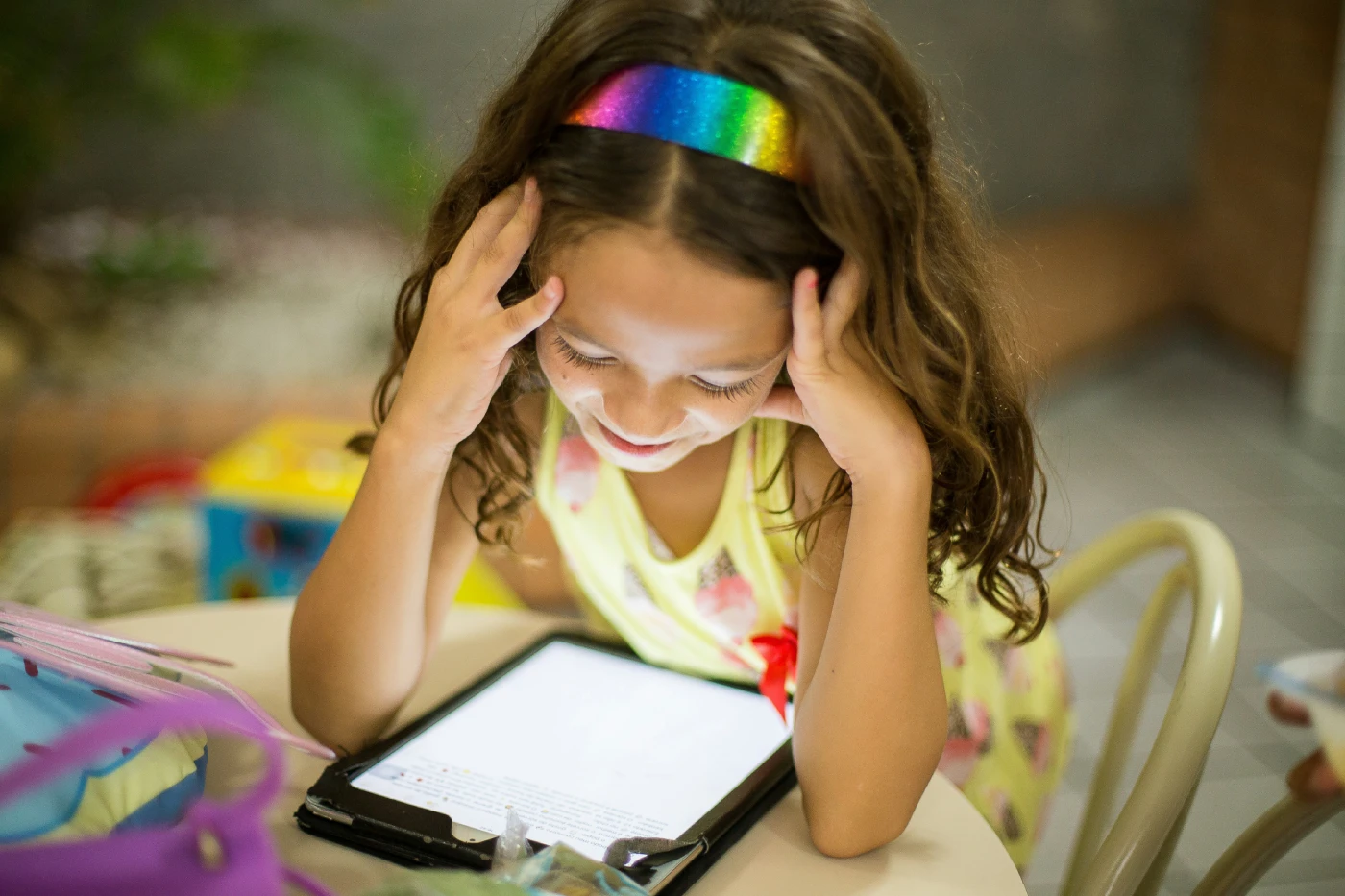
Why Is Emotional Intelligence Important for Preschool Children?
A child who can name what they are feeling is already ahead. Not academically — though that often follows — but in the more fundamental sense of being able to navigate their own inner world. Preschool children are feeling enormous things: jealousy, joy, shame, pride, disappointment, delight. Whether they have the tools to understand and manage those feelings makes all the difference to everything that follows.
Emotional intelligence — the ability to recognise, understand, express, and manage emotions in oneself and others — is not a soft skill or an optional add-on to early childhood education. It is foundational. The research that has accumulated over the past three decades makes this case comprehensively: children with stronger emotional intelligence learn better, form better relationships, cope more effectively with challenge, and fare significantly better across almost every measure of wellbeing and achievement into adulthood.
What Emotional Intelligence Looks Like in a Preschooler
Emotional intelligence in a three or four-year-old does not look like the composed self-awareness of an adult. It looks like stopping before hitting a friend who took their toy, and saying ‘I’m angry’ instead. It looks like noticing that another child is crying and moving closer rather than away. It looks like accepting a disappointment — a missed turn on the swing, a favourite activity that is over — without complete emotional collapse.
These are not small achievements. They represent the early stages of a set of capacities that psychologist Daniel Goleman identified as more predictive of life success than IQ: self-awareness, self-regulation, motivation, empathy, and social skill. All of them begin to develop — or fail to — in the preschool years.
The Five Components of Emotional Intelligence in Early Childhood
| Component | What It Looks Like in a Preschooler | Why It Matters |
|---|---|---|
| Self-awareness | Naming feelings: ‘I feel left out’ | Foundation for all other EQ skills |
| Self-regulation | Calming down before reacting | Enables learning and social participation |
| Motivation | Persisting with a difficult puzzle | Drives engagement and resilience |
| Empathy | Noticing a friend is upset and responding | Builds relationships and reduces conflict |
| Social skills | Taking turns, negotiating, apologising | Essential for school readiness and friendships |
Why Preschool Is the Critical Window
The Brain Is Highly Plastic
The neural pathways that govern emotional regulation are among the most actively developing during the preschool years. Experiences that help children identify and manage emotions during this window are not just teaching — they are shaping the brain’s wiring in ways that will influence emotional responses for decades.
Social Learning Is Happening Constantly
Preschool children are in continuous social learning mode. Every interaction — with a parent, a teacher, a peer — is an opportunity to observe how emotions are expressed, how conflict is handled, and what the social consequences of different emotional responses look like. This is why the emotional tone of a preschool environment matters so much. Children absorb it all.
The School Readiness Connection
Research consistently identifies emotional regulation as one of the strongest predictors of school readiness — more predictive, in some studies, than early literacy or numeracy skills. A child who can manage their emotions in a group setting, wait for their turn, resolve minor conflicts, and recover from disappointment is a child who is ready to learn. The best play schools in bangalore understand this deeply, and structure their programmes to develop emotional intelligence alongside early academic skills — because one enables the other.
How Emotional Intelligence Affects Learning
Learning requires a regulated nervous system. When a child is overwhelmed by emotion — whether that is excitement, anxiety, or frustration — the brain’s executive functions are compromised. The ability to attend, retain, and process new information is directly impaired by unmanaged emotional arousal.
Conversely, a child who can settle themselves after a difficult transition, manage the frustration of a task that is hard, and recover from a social disappointment is a child whose brain is available for learning. Emotional regulation is not separate from academic readiness — it is what makes academic readiness possible.
The Role of Emotional Vocabulary
One of the most powerful tools parents and educators can give a preschool child is an extensive emotional vocabulary. Children who can identify and name their emotions with precision — not just ‘sad’ but ‘disappointed’, not just ‘mad’ but ‘frustrated’ or ‘left out’ — show significantly better emotional regulation and social competence. Naming an emotion activates the prefrontal cortex and literally calms the brain’s stress response. It is a physiological intervention disguised as a vocabulary lesson. top nursery schools in bangalore that incorporate emotion-naming into daily routines — through morning check-ins, story discussions, and conflict resolution conversations — are giving children a tool they will use every day for the rest of their lives.
Empathy: The Social Foundation
Empathy Is Learnable
Children are not born with fully formed empathy — they develop it through experience, modelling, and guided reflection. A parent who says ‘Look at your friend’s face — how do you think she feels right now?’ is actively building empathy. A teacher who reads a picture book and asks ‘Why do you think he felt that way?’ is doing the same. These are not incidental moments. They are deliberate instruction in one of the most important human capacities.
Empathy and Conflict
Preschool children fight. They take each other’s things, they exclude, they say unkind things without fully understanding the impact. The way adults respond to these moments shapes whether children develop the empathy to do better. A punitive response teaches children to hide conflict. A guided conversation — ‘How do you think she felt when that happened? What could you do now?’ — teaches the emotional reasoning that prevents the next conflict. best preschools in bangalore that train their educators in emotion coaching approaches consistently report lower levels of peer conflict and higher levels of prosocial behaviour in their classrooms.
What Parents Can Do at Home
- Name emotions out loud — your own, and your child’s. ‘I can see you’re really disappointed that we have to leave. That makes sense — you were having so much fun.’
- Read picture books that explore emotional themes and discuss the characters’ feelings.
- Validate emotions before redirecting behaviour. Saying ‘I can see you’re angry’ before ‘But we don’t hit’ teaches children that their feelings are acceptable even when their actions are not.
- Model healthy emotional expression and regulation in your own behaviour. Children learn more from observation than from instruction.
- Create a ‘calm down’ space at home — not as a punishment, but as a place a child can go to regulate when they feel overwhelmed.
- Practise perspective-taking during everyday moments: ‘How do you think grandma felt when you did that?’
What to Look for in a Preschool Environment
When evaluating pre schools in bangalore, look specifically for how staff respond to emotional moments. Do they validate feelings before addressing behaviour? Do they use conflict as a teaching opportunity rather than simply stopping it? Is there a calm, predictable environment that helps children regulate? Do children seem settled and safe? These are the markers of a programme that understands emotional intelligence — and is actively building it.
Observe the language teachers use. Educators who say ‘use your words’ without teaching children what words to use are missing the opportunity. Educators who sit beside a distressed child, name what they see, and guide them through it are doing something profoundly important.
Emotional Intelligence and Long-Term Outcomes
The longitudinal research on emotional intelligence is compelling. Studies tracking children from preschool through adulthood consistently show that those with stronger early emotional competence have better academic outcomes, stronger friendships, lower rates of mental health difficulties, and greater career success. The most cited of these is the Stanford Marshmallow Study and its follow-up work, which showed that the ability to delay gratification — a core self-regulation skill — at age four predicted outcomes decades later.
This does not mean emotional intelligence is destiny — it can be developed at any age. But the preschool years are when it is easiest to build, and when the investment yields the greatest long-term return. daycare in bangalore that understand this design their environments, train their educators, and structure their days with emotional development at the centre — not because it is fashionable, but because the evidence for doing so is overwhelming.
Key Takeaways
- Emotional intelligence — the ability to recognise, manage, and respond to emotions in oneself and others — is among the strongest predictors of learning readiness, social competence, and long-term wellbeing.
- The preschool years are a critical window for developing emotional intelligence because the brain is highly plastic and social learning is happening continuously.
- Emotional vocabulary is one of the most powerful tools adults can give preschool children — naming emotions literally calms the brain’s stress response.
- Empathy is learnable, and guided conversations about others’ feelings are one of the most effective ways to build it.
- Preschool environments that respond to emotional moments with validation and coaching — rather than punishment or dismissal — produce children with stronger self-regulation and social skills.
Conclusion
A child who can identify what they feel, manage the intensity of that feeling, and understand how their actions affect others is a child who is ready — not just for school, but for life. Emotional intelligence is not something children either have or lack; it is something that is built, day by day, through the quality of their relationships and the responsiveness of the adults around them. For families exploring best montessori schools in bangalore or any other early childhood setting, the question to ask is not just what children are taught, but how the school responds when a child is struggling emotionally. That response tells you everything about whether emotional intelligence is truly being built — or just talked about.
FAQs
- Can emotional intelligence be taught, or is it innate?
Both nature and nurture play a role. Some children have temperamental traits that make certain aspects of emotional regulation easier or harder. But emotional intelligence is substantially shaped by environment and experience — which means it can be actively developed through intentional parenting and quality early education. - How is emotional intelligence different from emotional expression?
Emotional expression is simply showing how you feel — which children do from birth. Emotional intelligence goes further: it involves recognising what you feel, understanding why, managing the intensity of the feeling, and responding to others’ emotions thoughtfully. Expression is the raw material; intelligence is what you do with it. - My child has big emotional reactions. Should I be worried?
Intensity of emotional response varies enormously between children, and strong feelings are not a sign of poor emotional intelligence. What matters is whether the child is gradually developing the ability to manage those feelings — however intense — with adult support. If the reactions are completely dysregulating and not improving with time and support, a conversation with a paediatrician or child psychologist is worthwhile. - Is emotional intelligence related to social skills?
Closely. Social competence is built on a foundation of emotional intelligence — the ability to read social cues, manage one’s own emotional reactions in social contexts, and respond to others empathetically. Children with stronger emotional intelligence consistently demonstrate stronger social skills, and vice versa. - Should I always validate my child’s emotions, even when they are behaving badly?
Yes — with an important distinction. Validating the emotion (‘I can see you’re furious’) is separate from accepting the behaviour (‘but we don’t throw things’). Children who learn that their feelings are always valid, even when their actions need to change, develop a secure emotional vocabulary and respond better to behavioural boundaries. - At what age do children develop empathy?
Rudimentary empathy — responding to another’s distress — appears in infancy. More sophisticated perspective-taking, which involves understanding that another person has different feelings and thoughts from one’s own, develops more fully from around age four. This is why preschool is such an important time to nurture it explicitly. - How can I tell if a preschool is genuinely building emotional intelligence?
Watch how educators respond when children are distressed or in conflict. Do they name emotions, validate feelings, and guide children through resolution — or do they simply redirect or discipline? The quality of these micro-interactions reveals whether emotional intelligence is embedded in the programme or merely a line in the school brochure.
