
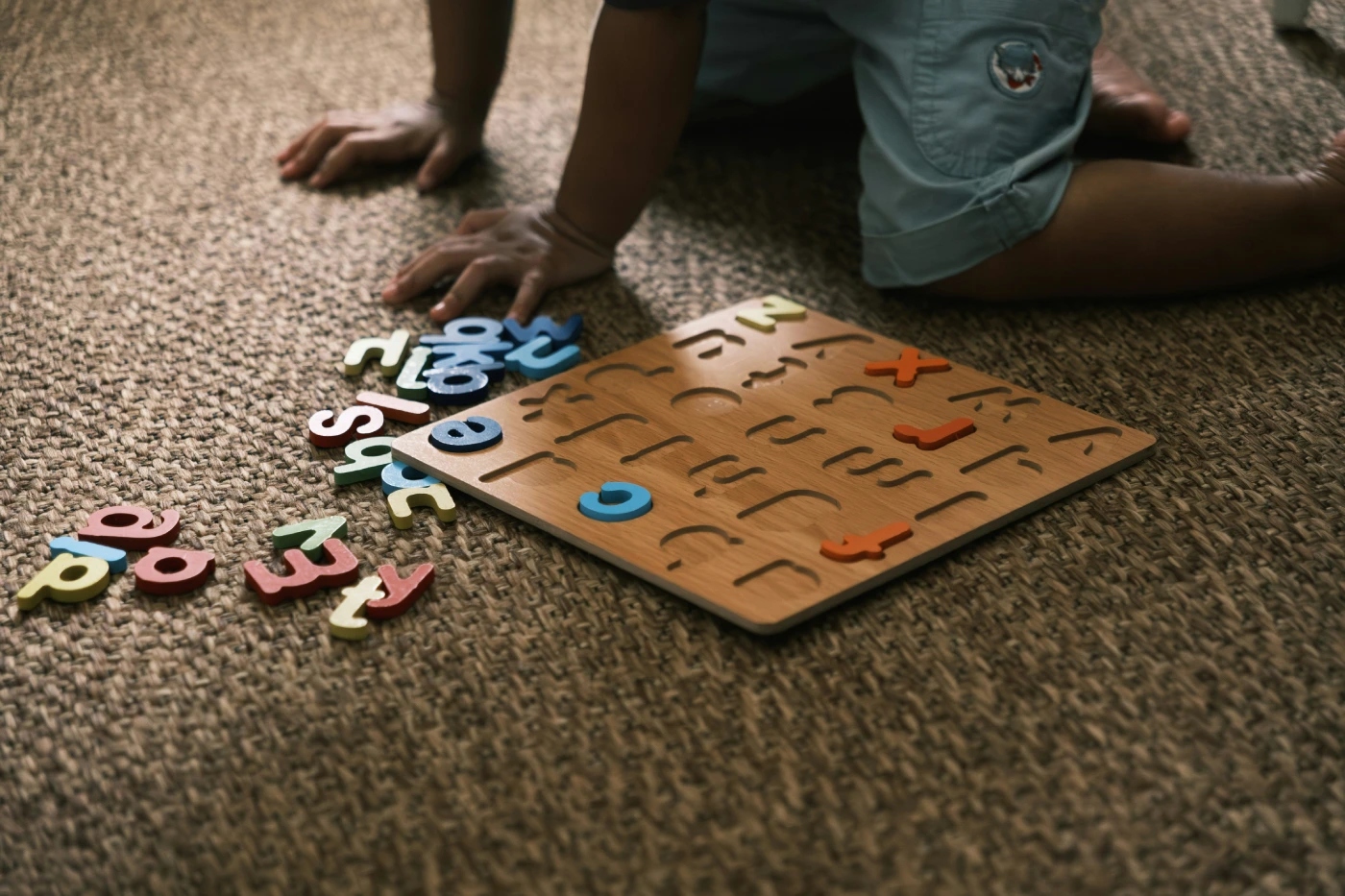
Watch a toddler with a shape sorter. They push the triangle at the round hole, then the square hole, then turn it sideways and try again. Eventually it drops through. Five minutes later, they do it on the first try.
No one explained geometry to them. They learnt through trial and error, one of the oldest and most natural ways children solve problems. This article looks at why trial and error matters so much in the early years, what research says about it, when it needs adult support, and how to make room for it at home and in preschool.
What Children Learn From Trial and Error
How the world works
Every attempt teaches a child something. The triangle does not fit the round hole. Blocks stacked unevenly fall. Water poured too fast spills. Over hundreds of small experiments, children build a working model of how objects behave.
Developmental psychologist Alison Gopnik has compared young children to scientists for this reason. They form ideas, test them through play and adjust based on what happens.
That mistakes are part of the process
A child who tries, fails and then succeeds learns that the first attempt does not have to be right. This lesson shapes how they approach harder problems later, in school and beyond.
How to adjust their approach
Good problem-solvers do not repeat the same failed attempt. Trial and error teaches children to change something each time, such as the angle, the order or the amount of force. That habit of adjusting is the core of problem-solving.
You can often see this happen in real time. A child building a tower that keeps falling may first add more blocks, then try bigger blocks at the bottom, then slow down and place each one carefully. Each change is a small hypothesis being tested.
What Research Says About Letting Children Explore
Showing too much can limit discovery
A 2011 study by Elizabeth Bonawitz and colleagues gave preschoolers a toy with several hidden functions. When an adult demonstrated one function as if teaching it, children mostly repeated that function and found fewer of the others. Children who were not shown a function explored more and discovered more.
The study does not mean adults should never teach. It shows that when an adult demonstrates something, children tend to assume that is all there is to find. Leaving room to explore changes what they discover.
For parents, the practical version is simple. When handing your child a new toy, try saying nothing about how it works for the first few minutes and see what they find on their own.
Praising effort shapes how children see mistakes
A 2013 study by Elizabeth Gunderson and colleagues recorded how parents praised their toddlers between the ages of one and three. Children whose parents praised effort and strategy more often were more likely, years later, to believe that ability grows with practice.
How adults respond to attempts, successful or not, affects whether a child wants to keep trying.
Materials that let children check themselves
Maria Montessori designed many classroom materials with a built-in “control of error”. A set of cylinders fits into matching holes only one way, so a child can see a mistake without an adult pointing it out. This lets children correct themselves through trial and error.
Trial and Error vs Direct Instruction: A Comparison
| Aspect | Trial and error | Direct instruction |
| How the child learns | Tries, observes, adjusts | Watches and copies |
| Speed | Slower at first | Faster for a single task |
| What sticks | Understanding of why it works | The specific steps shown |
| Main risk | Frustration if the task is too hard | Less exploration and fewer discoveries |
| Best for | Puzzles, building, open-ended play | Safety rules, new tools, skills with set steps |
The Obvious Objection: Isn’t Trial and Error Slow and Frustrating?
It can be. A child who tries the same wrong move ten times may end up in tears. Some things also should never be learnt by trial and error. No child should find out by experiment that a stove is hot or that a road is dangerous.
Trial and error works when three conditions are met. The task is safe. It is only slightly beyond what the child can already do. And an adult is nearby to step in if frustration takes over.
Stepping in does not have to mean solving the problem. A small hint, such as “what if you turn it around?”, keeps the child in charge while moving them forward. Direct teaching still has its place for safety rules and skills with fixed steps, like washing hands properly.
How Preschools Support Trial and Error
A good montessori preschool or play-based classroom is set up so children can try things without constant adult direction. Materials are on low, open shelves, and children choose what to work on.
Common activities that build trial-and-error problem-solving include:
- Puzzles with a gradually increasing number of pieces.
- Building blocks, where towers, bridges and ramps fall and get rebuilt.
- Sand and water play with containers of different sizes.
- Simple construction sets where pieces connect in several ways.
- Outdoor play on climbing frames, balance beams and slopes.
When comparing the top play schools in bangalore, notice how teachers respond when a child struggles. A teacher who waits, watches and offers a small hint is giving the child room to learn. A teacher who immediately fixes the problem, however kindly, takes that chance away.
How Parents Can Encourage Trial and Error at Home
Most of this comes down to what parents hold back from doing.
- Wait a little longer before helping. Count to ten silently if you need to.
- When your child asks for help, ask “what have you tried?” first.
- Offer a hint instead of a solution, such as pointing to the piece that might fit.
- Praise the attempt and the strategy, for example “you tried turning it, that was smart”.
- Choose toys that can be used in more than one way, such as blocks, clay and containers.
- Let small failures happen, like a tower falling, without rushing to comfort or fix.
It also helps to model trial and error yourself. When something does not work for you, say out loud what you will try next. Children notice how adults handle their own mistakes.
A parent who says “that didn’t work, let me try it a different way” while fixing a shelf or following a recipe is teaching the same lesson the shape sorter teaches.
When to Step In
Trial and error should stretch a child, not break them. Step in when the child is repeating the same attempt with no change, is becoming very upset, or is about to do something unsafe.
After helping, give the task back as soon as possible. The aim is to get the child moving again, not to finish the job for them.
Key Takeaways
- Trial and error teaches children how the world works, how to adjust their approach and that mistakes are normal.
- Research shows that demonstrating one answer can reduce how much children explore.
- Praising effort and strategy helps children believe that ability grows with practice.
- Trial and error works best with safe tasks, slightly beyond current ability, with an adult nearby.
- Hints keep the child in control, while solving the problem for them removes the learning.
Conclusion
Trial and error is how young children first learn to solve problems. Each failed attempt gives them information, and each success shows them that persistence pays off.
The adult’s job is mostly to set up safe challenges, wait, and offer hints instead of answers. That balance lets children build problem-solving skills they will use long after the shape sorter is forgotten.
Frequently Asked Questions
- At what age do children start learning through trial and error?
From infancy. Babies reach, drop and mouth objects to learn how they behave, and this develops into more deliberate problem-solving in the toddler years. - How do I stop my child getting frustrated?
Choose tasks slightly beyond their current ability, stay nearby, and offer a small hint before frustration takes over. - Should I let my child fail?
In safe, small ways, yes. Recovering from small failures builds persistence and confidence. - What toys support trial and error?
Open-ended toys such as blocks, puzzles, clay, containers and construction sets work well. - Is trial and error better than teaching?
Neither is always better. Trial and error suits exploration, while direct teaching suits safety rules and fixed routines. - What is control of error in Montessori?
It is a feature built into materials that lets children see and correct their own mistakes without an adult pointing them out.
