
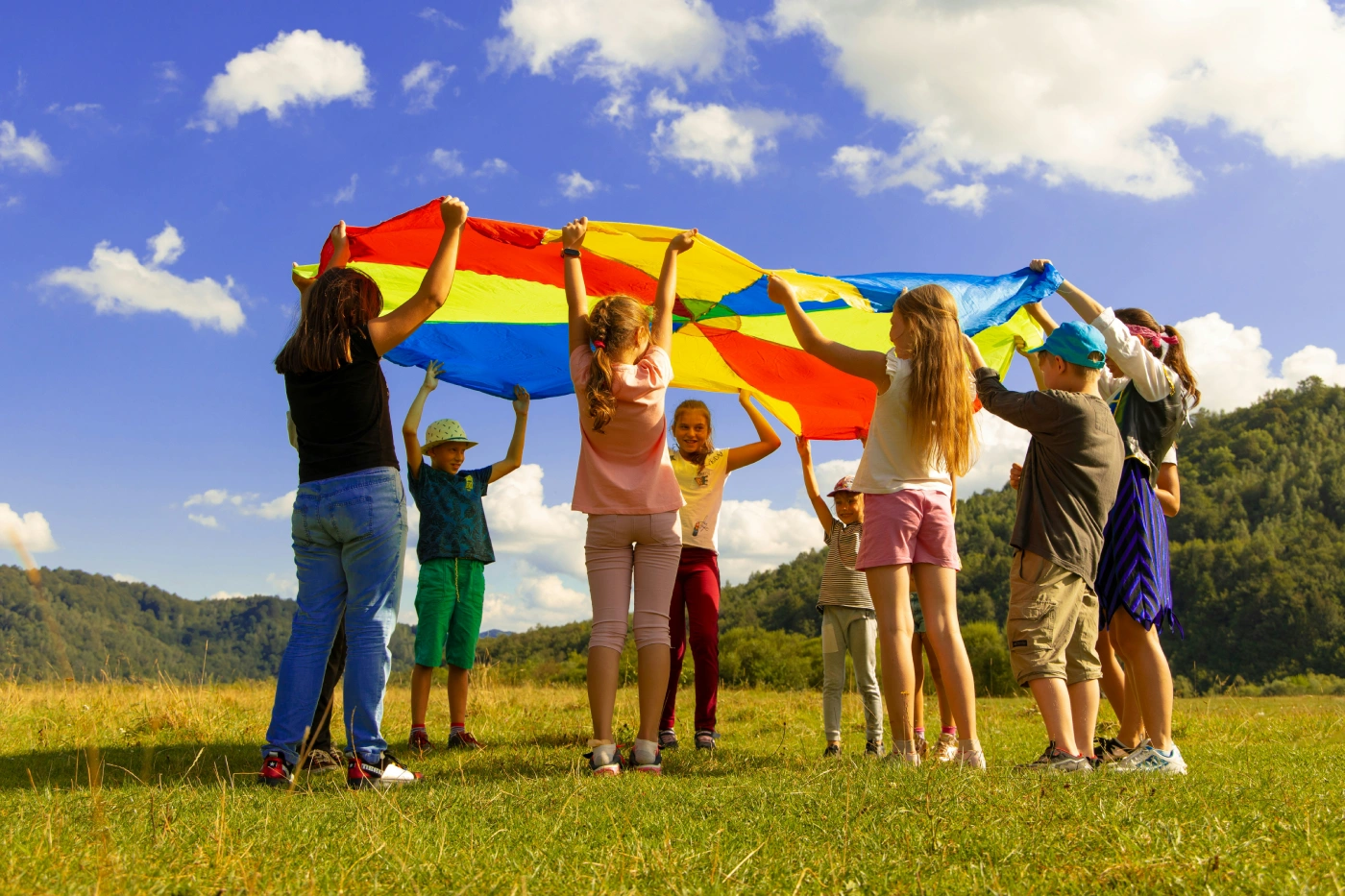
Annual days, sports meets, cultural programmes, science fairs, storytelling sessions, and art exhibitions — school events can sometimes feel like a disruption to the ‘real’ work of education. The truth is the opposite. For young children, school events are among the most powerful developmental experiences a school year contains. They offer something that no worksheet or lesson plan can: a real audience, a real contribution, and the experience of being genuinely seen.
This article explores how school events build confidence in young children, what makes some events more effective than others, and how parents can support children through the inevitable nerves that come with performing or participating in public.
What We Mean by Confidence in Young Children
Before exploring how school events build confidence, it is worth clarifying what confidence actually means in early childhood. It is not the same as being bold, loud, or outgoing — some of the most confident children are also the quietest. True confidence, at this age, is the internal sense that one’s efforts are worthwhile, that one is capable of contributing something meaningful, and that the people around you are safe to be imperfect in front of.
This kind of confidence — sometimes called self-efficacy — is built through accumulation: many small experiences of trying something, managing the attempt (including imperfect ones), and receiving genuine recognition for the effort. School events create precisely these experiences, repeatedly and in varied forms, across a child’s early years.
Early childhood educators at the best play schools in bangalore understand that confidence is not a personality trait children either have or lack — it is a skill that develops through supported exposure to challenge, and school events are one of the richest contexts for that development.
The Types of School Events and What Each Builds
| Event Type | Confidence Skill Built | How It Works |
|---|---|---|
| Annual Day / Cultural Programme | Performance confidence, creative identity | Children prepare, rehearse, and perform for an audience — building the experience of sustained effort leading to a valued outcome |
| Sports Day / Fun Runs | Physical confidence, team belonging | Children experience their bodies as capable; team events build the sense of being a valued contributor to a group |
| Science Fair / Project Exhibition | Intellectual confidence, pride in work | Children explain their work to others, fielding questions and owning their thinking publicly |
| Storytelling or Show and Tell | Verbal confidence, self-expression | Children practise sharing their ideas, experiences, and personality in front of a safe audience |
| Art Exhibitions | Creative confidence, visibility | Children’s work is displayed and valued publicly — communicating that what they make matters |
| Graduation / Milestone Ceremonies | Identity and transition confidence | Children experience themselves as achievers, capable of growth and new beginnings |
Why Performing for an Audience Is Particularly Powerful
Of all the school event formats, performances — annual day shows, cultural programmes, nativity plays, music concerts — are perhaps the most potent for confidence building. This might seem counterintuitive, given that they also produce the most anxiety. The anxiety itself is part of what makes them valuable.
When a child manages nervousness, prepares carefully, stands up in front of an audience, and completes a performance — even an imperfect one — they have done something that felt impossible before and possible afterward. That shift in self-belief is not trivial. It is one of the most durable confidence-building experiences a young child can have, and it is available to every child who participates, regardless of whether their performance was flawless.
Families whose children attend daycare in bangalore or similar early learning environments often observe that their children’s willingness to try new things increases noticeably after their first school performance — a direct reflection of the expanded sense of capability that the experience produces.
The Role of Preparation in Confidence Building
An important nuance: school events build confidence most effectively when children are well-prepared. A child who is thrown onto a stage with minimal rehearsal is far more likely to experience shame than growth. The preparation process — the repeated practice, the gradual increase in familiarity, the building of competence — is where the real confidence development happens.
This is why the weeks leading up to a school event are often as valuable as the event itself. Children who rehearse their lines, practise their dance routine, or refine their science explanation are engaging in the kind of sustained, purposeful effort that builds genuine self-belief. The performance is the culmination, but the growth happens along the way.
How Educators Support Children Through Preparation
- Breaking the task into manageable steps so children experience frequent small successes
- Celebrating effort and improvement throughout the rehearsal process, not just polished final performance
- Creating a psychological environment where mistakes during practice are expected and normalised
- Giving every child a role that is meaningful but appropriately matched to their current confidence level
- Using group rehearsal to build the sense of collective ownership — every child contributes to the whole
School Events and the Development of Belonging
Confidence is not built in isolation — it develops within relationships and communities. School events contribute to confidence in part because they build the sense of belonging that makes risk-taking feel safe.
A child who has stood on stage alongside classmates, cheered for teammates on sports day, or seen their artwork hanging next to a friend’s in an exhibition has a stronger sense of being part of something. That belonging — the knowledge that one has a place and a valued role in a group — is one of the most powerful foundations for confidence that exists.
This is particularly significant for children who have recently transitioned into a new school environment. Participation in a shared event — even in a small role — accelerates the process of feeling at home in a new community and with new peers.
The school events calendar at the top pre schools in bangalore and similar early learning centres is designed not just for entertainment but as a deliberate tool for community-building — ensuring that every child has multiple opportunities throughout the year to feel seen, valued, and genuinely part of their school family.
What Parents Can Do to Support Children Around School Events
Parental response to school events significantly shapes what children take from them. Some approaches amplify the confidence benefit; others unintentionally undermine it.
What Helps
- Focus on the effort and the experience, not the outcome: ‘I love how hard you practised’ is more powerful than ‘You were the best one up there’
- Acknowledge nervousness without amplifying it: ‘It’s normal to feel a little nervous — that means it matters to you. You’ve got this’
- Attend if at all possible — parental presence at school events is deeply meaningful to young children, who look for familiar faces in the audience
- Celebrate participation, not just performance: every child who shows up and tries has done something worth celebrating
- Ask open questions afterward: ‘What was your favourite part?’ invites reflection without evaluation
What to Avoid
- Comparing your child’s performance to other children’s, even privately in front of them
- Expressing disappointment if things don’t go as planned — mistakes during events are normal and build resilience when handled with warmth
- Over-coaching before the event in a way that transfers your anxiety to the child
- Framing the event as a test to pass rather than an experience to have
When Children Are Reluctant to Participate
Some children — particularly those who are more introverted, anxious, or new to the school environment — find school events genuinely distressing rather than exciting. This is normal and requires a thoughtful response.
The key is to find a role that allows the child to participate at a level that is challenging but manageable — a backstage role, a part with one line, a position in the ensemble where they are not spotlighted individually. Forcing a reluctant child into a prominent role rarely produces confidence; it more often produces shame and avoidance. Meeting a child where they are and building gradually toward more is a far more effective strategy.
Educators at the top kindergarten schools in bangalore approach participation in school events with the same child-centred philosophy that informs all early childhood education — beginning where each child is, extending gently toward the edge of their comfort zone, and celebrating every step forward, however small.
Key Takeaways
- School events build confidence through the experience of preparation, performance, and genuine recognition — experiences that no classroom lesson can replicate
- Confidence in early childhood is built through accumulation: many small experiences of trying, managing, and being valued
- The preparation process is as valuable as the event itself — sustained effort toward a meaningful goal builds self-belief
- Belonging developed through shared events is one of the most powerful foundations for confidence in young children
- Parental response to school events matters: focusing on effort rather than outcome amplifies the confidence benefit significantly
Conclusion
School events are not interruptions to learning — they are some of its richest moments. The child who stands on a stage, runs a race, displays their artwork, or explains their science project to a curious adult has done something that changes how they see themselves. That change — subtle, quiet, cumulative — is confidence in the making. It is one of the most important things a school can give a young child, and it happens not in the classroom, but in front of the whole community.
FAQs
- Why are school events important for young children?
School events give children opportunities to prepare for and participate in something meaningful in front of a real audience. This experience — of sustained effort, performance, and genuine recognition — builds confidence, belonging, and identity in ways that regular classroom learning cannot fully replicate.
- How do school events build confidence?
They build confidence through the experience of managing nervousness, completing a preparation process, performing or participating publicly, and receiving recognition for the effort. Each of these experiences expands a child’s sense of what they are capable of.
- What if my child is too nervous to perform in school events?
Nervousness before a performance is entirely normal and healthy — it signals that the event matters. Help by acknowledging the feeling without amplifying it, focusing on how much they’ve practised, and reminding them that you’ll be there watching. If anxiety is severe, talk with the teacher about finding a role that allows participation at a comfortable level.
- Should I force my child to participate in school events if they don’t want to?
Forced participation rarely builds confidence — it more often builds avoidance. A better approach is to find a role that allows the child to participate at a manageable level, celebrate that participation enthusiastically, and build gradually toward fuller engagement over time.
- How can I support my child after a school event that didn’t go well?
Focus on the effort, the preparation, and the courage it took to show up. Acknowledge what was difficult without dwelling on it. Ask what they are proud of, and let them see that you are proud of them regardless of the outcome. Resilience after imperfect performances is itself a confidence-building experience.
- Are school events only about performance and arts?
No. School events span performances, sports meets, science fairs, art exhibitions, storytelling sessions, community service projects, and milestone ceremonies. Each type offers different confidence-building experiences, and a well-designed school calendar includes variety so that every child has opportunities to shine in ways that match their strengths.
- How important is parent attendance at school events?
Very important for young children. Parental presence at a school event communicates: you and what you do matter to me. Children regularly scan the audience for familiar faces; seeing a parent there is one of the most significant boosts to confidence and enjoyment an event can provide.
- At what age should children start participating in school events?
Even the youngest children — toddlers in a playgroup or nursery setting — can participate in age-appropriate events: simple sing-alongs, movement performances, and display exhibitions. The key is that the event is appropriate for the child’s developmental stage and that participation is supported and celebrated rather than evaluated.
