
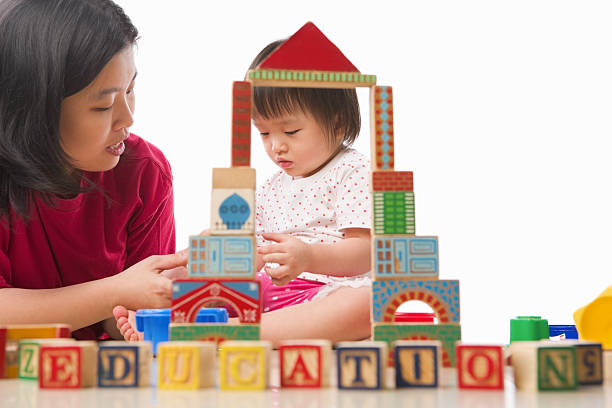
There is a common misconception that separates play from learning — that time spent playing is time away from the serious business of education, and that the sooner children settle into structured academic work, the better. This view is not only wrong; it runs directly against the grain of everything developmental science has established about how young children actually learn. For children under the age of seven or eight, play is not the opposite of learning. It is the primary vehicle through which learning happens, and its value cannot be replicated by any amount of formal instruction.
This is not a sentimental claim about the joys of childhood — though those joys matter too. It is a claim grounded in neuroscience, developmental psychology, and decades of educational research. When children play, their brains are engaged in some of the most complex cognitive work they will ever do: forming and testing hypotheses, developing language, building social understanding, exercising executive function, and constructing meaning from experience. Play is how the young human brain was designed to learn, and early childhood settings that take this seriously give children a profound developmental advantage.
What Play-Based Learning Actually Looks Like
Play-based learning does not mean unstructured free-for-all. It is a thoughtfully designed approach to early education in which children’s natural drive to explore, experiment, and make meaning through play is harnessed and guided by skilled educators. It can take many forms: open-ended block building that introduces mathematical thinking and spatial reasoning; dramatic play that develops language, empathy, and narrative understanding; sensory exploration that builds scientific thinking; collaborative outdoor play that builds physical confidence and social negotiation skills.
The teacher’s role in play-based learning is active and intentional. Skilled early childhood educators observe children’s play carefully, identify the learning happening within it, introduce materials and provocations that extend and deepen that learning, and use moments of genuine curiosity as entry points for introducing new concepts and vocabulary. This is teaching of a high order — responsive, individualised, and grounded in deep knowledge of child development.
What Research Tells Us About Play and Development
Cognitive Development
Play is one of the most powerful contexts for cognitive development in early childhood. When children engage in symbolic play — using a block as a phone, a cardboard box as a rocket, a piece of cloth as a royal cape — they are exercising the capacity for abstract representation that is the cognitive foundation of literacy and numeracy. The ability to let one thing stand for another, to hold a mental image in mind and act upon it, is the same capacity that allows a child to understand that written symbols represent sounds and that numbers represent quantities.
Problem-solving during play — figuring out why the block tower keeps falling, working out how to share the swing with three children, negotiating the rules of a pretend game — exercises executive function skills including working memory, cognitive flexibility, and inhibitory control. These skills, now recognised as among the strongest predictors of long-term academic and life success, are built through play in ways that formal instruction struggles to match.
Language and Literacy Development
The relationship between play and language development is particularly rich and well-documented. During dramatic play, children produce language that is significantly more sophisticated, varied, and elaborate than in other contexts — including formal classroom discussions. They negotiate roles, construct narratives, argue about rules, and describe imaginary worlds in ways that stretch their vocabulary and grammatical repertoire far beyond everyday conversation. Educators at the top nursery schools in Bangalore who observe and participate thoughtfully in children’s dramatic play are witnessing — and contributing to — some of the most important language learning that happens in early childhood.
Social and Emotional Development
Play is the primary context in which young children learn to navigate the social world. In play with peers, children encounter the full range of social challenges — disagreement, disappointment, exclusion, cooperation, leadership, and followership — in a context where the stakes are low enough that mistakes can be made and repaired without lasting damage. They learn to read social cues, manage their impulses, advocate for their needs, and understand the perspectives of others. These are skills that cannot be taught through direct instruction; they must be practised in real social situations, and play provides those situations continuously.
Different Types of Play and Their Developmental Contributions
Free Play
Unstructured free play — in which children choose their own activities, set their own rules, and follow their own interests — is particularly valuable for developing autonomy, intrinsic motivation, and creative thinking. When children direct their own play, they are practising self-determination in its purest form. The skills of decision-making, persistence, and self-regulation that free play develops are among the most important foundations for independent learning. The best preschools in Bangalore protect generous periods of genuine free play in their daily schedules, understanding that the developmental work happening in these moments is irreplaceable.
Guided Play
Guided play sits between free play and direct instruction. In guided play, adults structure the environment and may introduce a learning goal, but children retain agency over how they engage with the materials and how the play unfolds. A teacher who sets up a water table with containers of different sizes and asks children to find out which holds the most is creating a guided play experience that develops mathematical and scientific thinking while preserving the child’s sense of exploration and discovery. This approach allows educators to align play experiences with developmental goals without sacrificing the motivational power of child-directed exploration.
Outdoor and Physical Play
Outdoor play is sometimes treated as a break from learning rather than as learning itself. In reality, outdoor play develops physical confidence and coordination, spatial awareness, risk assessment, resilience in the face of physical challenges, and the kind of sensory-rich experience that supports broader cognitive development. Children who spend regular time in outdoor play environments tend to show better concentration, lower stress levels, and more positive social behaviour in classroom settings. Families evaluating pre schools in Bangalore would do well to look closely at the quality and quantity of outdoor play provision, not just the indoor learning spaces.
The Risk of Removing Play Too Early
In many educational systems, including parts of India’s urban private school sector, there is growing pressure to introduce formal academic instruction — worksheets, phonics drills, number exercises — ever earlier in children’s lives. The research on the consequences of this shift is sobering. Studies comparing children who experienced play-based early education with those who experienced early formal instruction consistently show that the play-based learners catch up academically by the middle primary years and maintain significant advantages in social competence, motivation, creativity, and emotional regulation.
The daycare in Bangalore and early childhood sector more broadly benefits enormously when parents understand this research and make choices accordingly. Choosing a setting where play is genuinely valued is not a choice against academic preparation — it is the choice most likely to produce a well-rounded, confident, and genuinely capable learner.
FAQs
1. How is play-based learning different from just letting children play?
Play-based learning is intentionally designed — educators prepare rich environments, observe children’s engagement carefully, introduce materials that extend learning, and participate in play in ways that deepen thinking and language without overriding children’s agency. It is quite different from unsupervised free time, though generous periods of free play are also a valued component of high-quality early childhood programmes.
2. At what age is play-based learning most important?
Play-based learning is most critical in the years from birth to age seven or eight, when the brain is at its most plastic and when children’s natural learning instincts are most powerfully oriented toward exploration, imitation, and social play. This does not mean play stops being valuable after this age — it remains important throughout childhood and adolescence — but the early years are the window during which its developmental contributions are most uniquely powerful.
3. How can parents support play-based learning at home?
Parents can support play-based learning by providing open-ended materials — blocks, art supplies, natural materials, dress-up clothes, simple instruments — that invite exploration and creativity. Reading together, telling stories, and engaging in pretend play alongside children are also powerful contributions. The most important thing is to protect time for genuine, child-led play rather than filling every moment with structured activities and screen time.
4. Do play-based preschools in Bangalore prepare children adequately for primary school?
The research is clear that high-quality play-based early education provides an excellent foundation for primary school — not despite the emphasis on play but because of it. Children from play-based settings typically arrive at primary school with strong language skills, well-developed social competence, good concentration, and a positive relationship with learning. These qualities serve them extremely well in the school environment.
5. What should parents look for in a play-based preschool?
Parents should look for generous time for free and guided play, rich and varied materials that invite open-ended exploration, small group sizes that allow individual attention, outdoor play spaces, and educators who are clearly trained in child-led learning approaches. The best preschools in Bangalore that take play seriously will be able to speak articulately about the developmental theory behind their approach — not just describe the activities on offer.
